If you’ve been tapping on a wall and hearing a hollow, papery echo, you might already be seeing drywall signs of carpenter ants. These pests are masters at carving smooth tunnels through damp wall materials and nearby framing. It is often hidden until the damage spreads.
In fact, in a nationwide NPMA survey of pest professionals, “inside walls” were flagged as vulnerable in 73% of ant cases. This shows how commonly colonies establish in wall voids and requires proper management.
Why Carpenter Ants Target Drywall
Carpenter ants love moisture. When leaks, condensation, or humidity soften building materials, drywall becomes an easy pathway to wood studs and trim. Unlike termites, carpenter ants don’t eat cellulose; they excavate it by chiseling galleries that weaken structures over time.
The paper facing on the drywall hides tunneling activity, while the cavity behind it offers temperature-stable shelter. In New Hampshire’s humid summers and wet shoulder seasons, interior moisture problems can persist long enough for colonies to get comfortable indoors.
Top Drywall Signs of a Carpenter Ant Infestation
Spotting the warning signs early can save you from extensive repairs. Here’s what to look (and listen) for:
1) Faint Rustling or Scratching in the Walls
When a home is quiet, especially at night, you may hear soft rustling, ticking, or crackling from within a wall. That sound often signals workers enlarging galleries or moving frass. The noises tend to be localized to one area and can come and go with colony activity.
2) Tiny Pinholes with Frass Near Baseboards or Outlets
Carpenter ants keep their tunnels “clean” by pushing waste out through small, pin-sized holes. This debris (called frass) resembles fine, fibrous sawdust with bits of drywall, insulation, and insect parts mixed in.
You’ll often see it below outlets, under window sills, or along baseboards. (Pro tip: termite droppings look like uniform pellets, while carpenter ant frass is irregular and fibrous.)
3) Hollow or Soft-Sounding Drywall
Tap the wall with your knuckles. Hollow or papery sounds, especially when contrasted with adjacent sections, suggest internal voids from tunneling or moisture decay. In advanced cases, a gentle press may feel “spongy,” indicating compromised material.
4) Winged Ants (Swarmers) Emerge from Cracks or Vents
A sudden appearance of winged ants indoors typically points to a mature colony behind walls, not a few ants that wandered in. Swarmers emerge seasonally (often spring/early summer) and gravitate toward lighted windows.
5) Bulging, Bubbles, or Discoloration on Wall Sections
Moisture plus tunneling can lead to bubbling paint, staining, or subtle bulges. By the time these visual changes appear, damage may have spread to studs and trim.
Why Prompt Pest Control Action Matters
Carpenter ants aren’t just a nuisance; they’re a structural risk. Their galleries can undermine drywall and hollow out nearby framing members (studs, plates, window/door casings). Colonies also expand via satellite nests, often using utility chases around plumbing or wiring to spread from room to room.
The longer an infestation persists, the more invasive the remediation and the more extensive any follow-on carpentry. Addressing early drywall clues typically costs far less than repairing widespread structural damage.
READ: How Many Times a Year Should You Get Your House Sprayed for Bugs
Professional Inspection & Treatment
MVM Pest Control performs detailed, minimally invasive inspections to locate activity accurately and treat it effectively:
- Targeted diagnostics: moisture meters, inspection cameras, and careful probing to verify galleries without unnecessary demolition.
- Precise treatments: baiting strategies, crack-and-crevice applications, and dusts placed where ants travel. It is aimed at eliminating both parent and satellite colonies.
- Moisture & exclusion guidance: we identify conducive conditions (leaks, grading, ventilation) and seal gaps around utility penetrations, windows, and vents.
- Follow-up monitoring: to confirm colony collapse and prevent rebound.
Seeing frass piles, hearing wall noises, or noticing hollow drywall? Book a free inspection with MVM Pest Control before small warning signs become large repairs.
Prevention: Keep Carpenter Ants Out of Your Walls
A few proactive steps go a long way:
- Fix leaks fast – under sinks, behind tubs, around windows, and at the roofline.
- Manage humidity – use dehumidifiers in basements/crawlspaces; vent bathrooms and kitchens.
- Store wood smart – keep firewood and mulch well away from siding and foundations.
- Seal entry points – caulk around pipes, cable lines, dryer vents, and window frames.
- Schedule annual checkups – a routine inspection catches issues before they escalate.
Conclusion
Drywall signs of carpenter ants are red flags you should never ignore. Because colonies favor wall voids and moisture, early detection is the difference between a straightforward treatment and costly reconstruction.
MVM Pest Control helps New Hampshire homeowners find and eliminate carpenter ant colonies safely and effectively. If something seems “off” in your walls, schedule your free inspection today and protect your home from the inside out.
Frequently Asked Questions
Can carpenter ants really live inside drywall?
Yes. They don’t feed on drywall, but they tunnel through softened areas to access studs and other structural wood, establishing galleries inside wall voids.
How do I tell carpenter ants from termites?
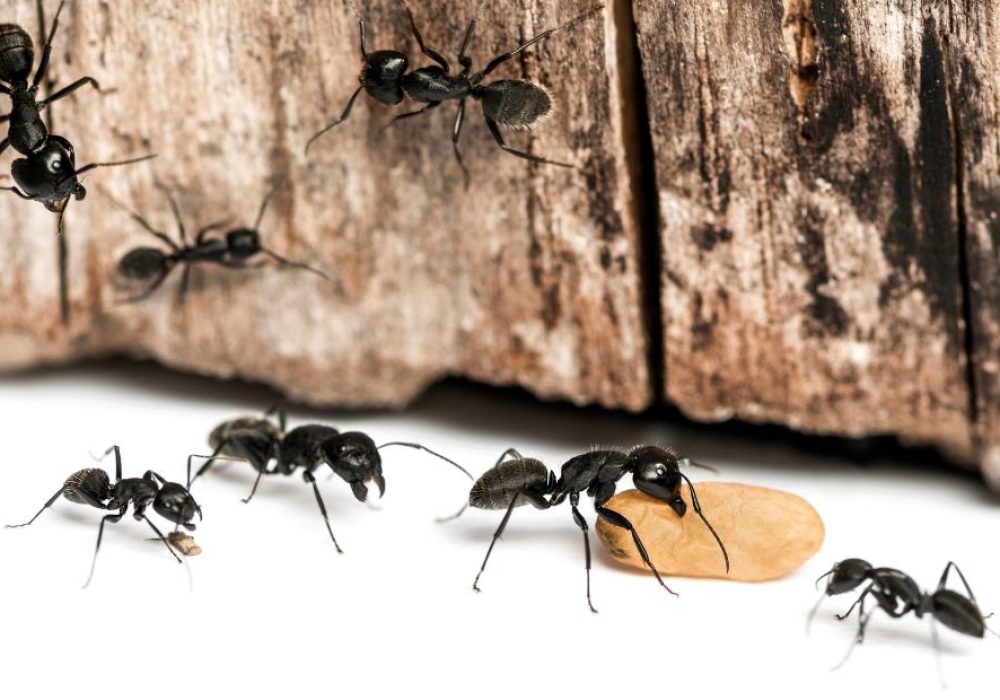
Carpenter ants have elbowed antennae and narrow waists; termites have straight antennae and more uniform bodies. Termites eat wood; carpenter ants excavate it.
Does MVM repair drywall after treatment?
Our focus is safe, thorough elimination. We can refer trusted local contractors for any needed drywall repairs once the colony is gone.