Wondering what does mouse poop look like?
Mice are masters of hiding, so droppings are often the first and clearest sign of an infestation. Learning to identify them quickly can help you act before a few rodents turn into a full-blown problem.
According to the Centers for Disease Control and Prevention (CDC), rodents are known to spread more than 35 diseases worldwide through droppings, urine, or saliva. This is a reminder that those tiny pellets aren’t just unpleasant; they can pose real health risks.
What Mouse Poop Looks Like
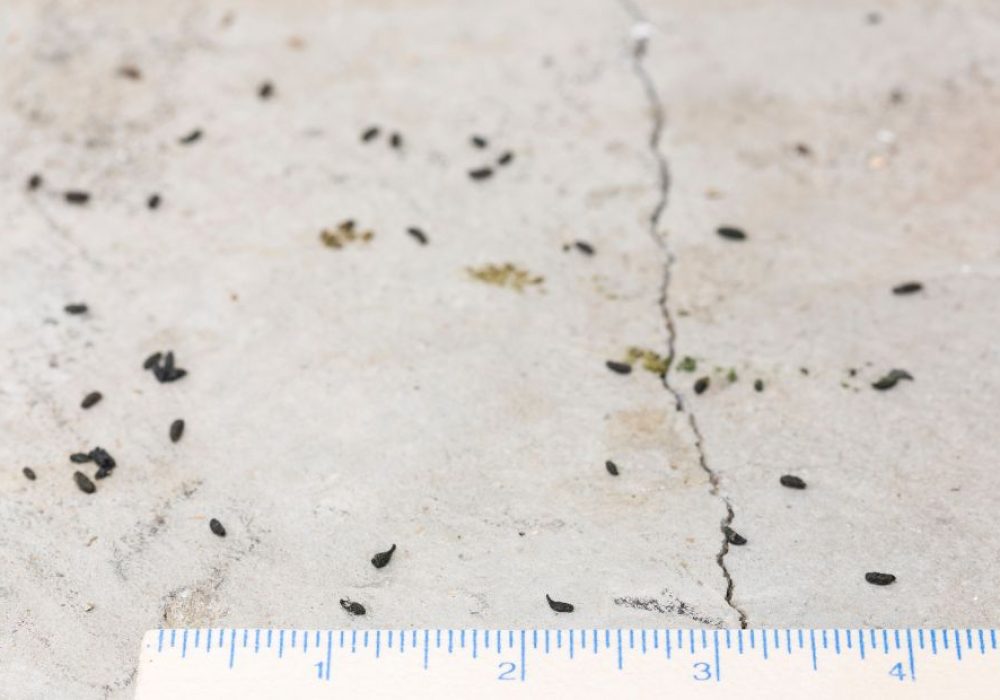
Mouse droppings are small, dark, and pellet-shaped (roughly the size of a grain of rice). Each dropping is about ⅛ to ¼ inch long, tapered at both ends, and typically dark brown or black when fresh. Over time, the color fades to gray as the droppings dry out.
Key characteristics:
- Shape: Rod-like pellets with pointed ends
- Size: ~3–6 mm (⅛–¼ inch)
- Color: Dark brown/black when fresh; turns gray as it ages
- Texture: Soft and shiny when new; dry and crumbly when old
You may find a small cluster in one place or scattered trails along walls and food sources. Because mice often travel the same paths each night, the location of droppings can reveal their activity routes.
Quick comparison (so you don’t mix them up):
- Mouse: ⅛–¼”, tapered ends; often in clusters/trails
- Rat: ½–¾”, thicker with blunt or rounded ends
- Cockroach: Tiny specks; cylindrical with ridges (often looks like coffee grounds)
If you’re unsure which pest you’re dealing with, avoid direct contact and get a rodent pest exterminator in Manchester for identification.
READ: What Do Pest Control Companies Use for Rodents
Fresh vs. Old Mouse Droppings
The age of droppings helps you gauge whether the issue is active or leftover evidence:
- Fresh: Shiny, moist, and dark. (If gently prodded with a tool (never a bare finger), they may be slightly soft.)
- Old: Gray, brittle, and dusty. This is a sign that activity may have slowed or moved.
Finding fresh droppings repeatedly over a few days strongly suggests ongoing activity.
Where You’ll Most Often Find Mouse Droppings
Mice prefer warm, hidden areas near food and nesting materials. Typical hotspots include:
- Behind/under kitchen appliances (stove, fridge)
- Pantry corners and food cabinets
- Basement perimeters and behind stored boxes
- Attics, crawl spaces, garages
- Near pet food bowls or bird seed
Even a handful of pellets can represent a larger unseen population. Wear gloves and a mask if you inspect. Don’t touch or disturb droppings until you’re ready to disinfect properly.
Health Risks from Mouse Droppings
The biggest concern is exposure to airborne particles when droppings are disturbed (sweeping, vacuuming, or even airflow). Diseases associated with rodent environments include:
- Hantavirus Pulmonary Syndrome (HPS): Rare but serious respiratory illness linked to aerosolized particles in rodent-infested areas.
- Salmonella: Can contaminate food or surfaces touched by droppings.
- Leptospirosis: Bacterial infection spread via rodent urine.
Rodent issues are more common than many homeowners realize: Nearly half (49%) of U.S. homeowners have found or had a problem with rodents in their homes. This highlights how widespread and under-recognized the risk can be.
How to Safely Clean Up Mouse Droppings
If you find droppings, don’t panic and don’t grab the broom. The goal is to clean effectively without kicking contaminated dust into the air. Follow CDC-aligned steps:
- Ventilate the area for ~30 minutes if possible.
- Wear protection: gloves, a mask, and eye protection.
- Do not sweep or vacuum dry droppings; that can aerosolize particles.
- Soak thoroughly with a disinfectant (or a fresh bleach solution) before removal.
- Wipe up with paper towels; seal waste in plastic bags.
- Disinfect surrounding surfaces; wash hands thoroughly.
These practices reduce risk while you address the source. For widespread contamination (e.g., in insulation/HVAC) or hard-to-reach zones, call pest exterminators from MVM Pest Control to remediate safely and prevent reinfestation.
When to Call a Rodent Exterminator in Manchester
DIY can handle small, isolated finds. But bring in rodent exterminators if you notice:
- Fresh droppings daily or in multiple rooms
- Chewed food packaging or wiring
- Scratching, squeaking, or movement inside walls
- Odors, grease marks, or nests
Pros won’t just remove droppings. They’ll locate entry points, eliminate active rodents, and seal vulnerabilities to keep them out.
READ: Effective Rodent Control Strategies for a Pest Free Home
Don’t Ignore the Signs
Now that you know what does mous poop look like, you can spot early warning signs before a small issue becomes a costly, unhealthy problem. While careful DIY cleanup can work for minor, isolated incidents, ongoing or widespread droppings signal an active infestation that’s best handled professionally.
At MVM Pest Control in Manchester, we pair decades of experience with safe, effective treatments to remove rodents at the source and keep them out. From free inspections to prevention plans, our team is ready to help you reclaim your space.
Seeing droppings or hearing scratching after dark? Schedule your free inspection with MVM Pest Control today.